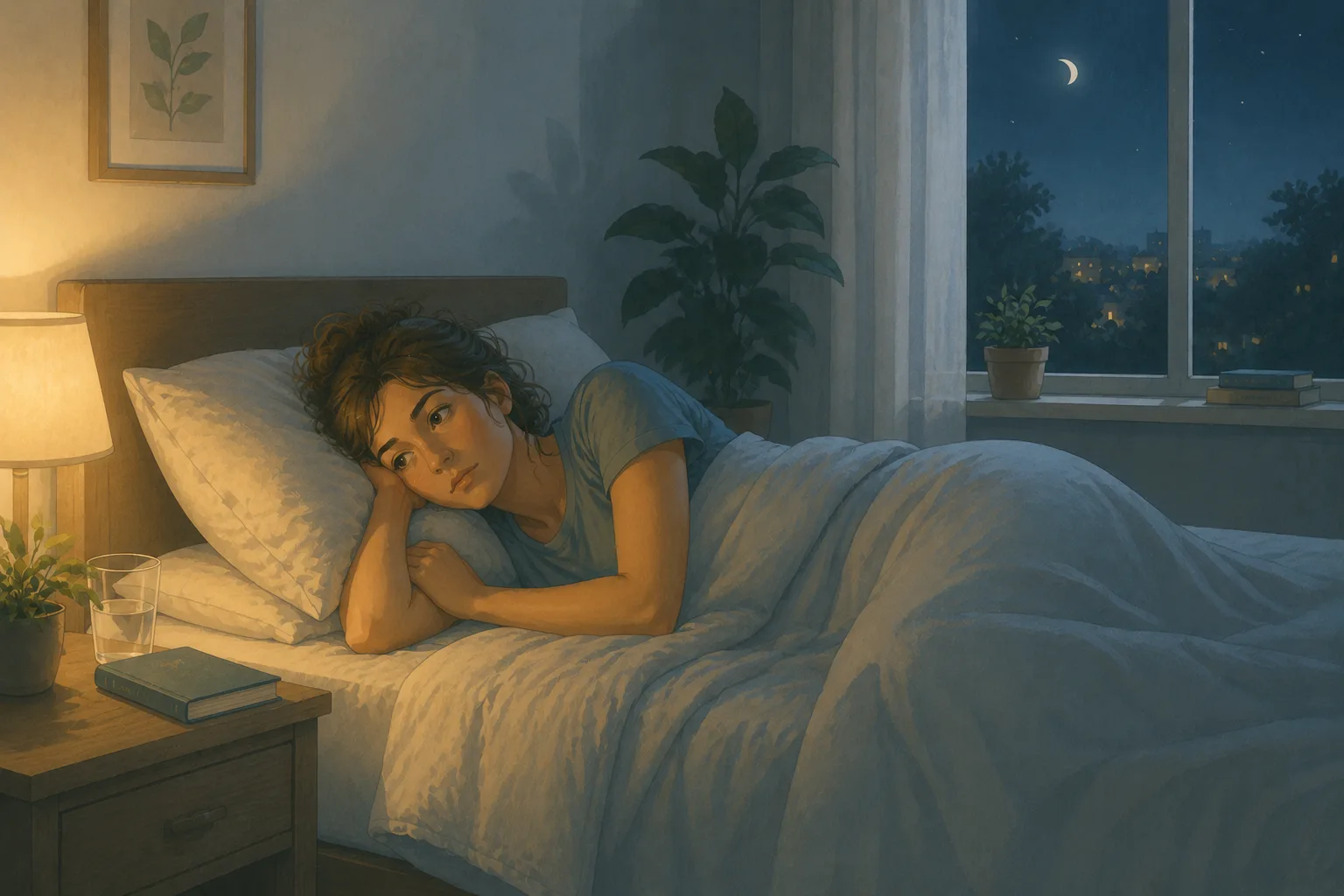
You fall asleep quickly. Faster than usual, maybe. The heavy, warm edge of the evening takes over and the day gets blurry. Then, a few hours later, you are awake again, staring at the ceiling and trying to work out why your body feels like it has changed its mind.
This is the part most people know from experience and rarely explain well: alcohol can help you fall asleep, but it still ruins the sleep that follows. The first part is sedation. The second part is disruption. They are tied together.
If you have ever relied on a nightcap and then found yourself wide awake at 3am, this is not random bad luck. It is what alcohol does to sleep architecture, brain chemistry, heart rate, and the body clock.
Why alcohol seems to help
Alcohol is a central nervous system depressant. In plain English, it turns down neural activity. It strengthens the effect of GABA, the brain’s main inhibitory neurotransmitter, and that is why muscles relax, thoughts slow, and the body feels heavy enough to drift off.
That sedating effect is real. It is also the reason alcohol and sleep get linked in the first place. If you are tired, anxious, or lying awake with a noisy mind, a drink can feel like it has solved the problem.
The problem is that falling asleep faster is not the same thing as sleeping well.
What happens when it wears off
Your brain does not like being pushed in one direction for long. When alcohol boosts inhibition and suppresses excitation, the nervous system starts compensating almost immediately. As the alcohol clears, that compensation is still there.
The result is a rebound toward wakefulness. People often call this the glutamate rebound, but the bigger point is simpler: the sedating effect fades first, while the compensatory excitation lingers.
That is why the wake-up often comes in the same window, usually about three to four hours after the last drink. The brain is not broken. It is overcorrecting.
At the same time, stress signals rise when they should be falling. Cortisol behaves as though the body needs to be alerted. Heart rate climbs. Sleep gets lighter and more fragile. What felt like a calm wind-down in the evening becomes a stressed, restless second half of the night.
What the Finnish study found
A large observational study of Finnish employees tracked heart rate variability during sleep on nights with and without alcohol. Heart rate variability, or HRV, is one of the clearest signs of whether the body is recovering or still under physiological strain.
The findings were hard to ignore. Physiological recovery during the first hours of sleep dropped by 9.3 percentage points after low alcohol intake, 24.0 percentage points after moderate intake, and 39.2 percentage points after high intake. The effect showed up in both sexes and even at relatively low intake levels.
That matters because it shows something people often miss: you can feel sedated and still sleep badly. The body is not resting in the same way it does on a sober night.
What alcohol takes away from REM
Sleep is not one thing. It moves through different stages, and REM sleep is one of the most important. This is the phase most closely tied to emotional processing, memory, and mood regulation.
Alcohol suppresses REM sleep in the first half of the night. A recent systematic review and meta-analysis found that it delays the start of REM and shortens how long REM lasts overall.
Later in the night, REM can rebound, but that does not make the sleep restorative. It tends to be fragmented, vivid, and sometimes disturbing. So even if you sleep through the whole night, you may wake feeling emotionally flat, more reactive, or oddly unsteady for the day ahead.
This is one reason alcohol and sleep quality are not the same question. The clock time may look fine. The recovery is not.
The nightcap trap
The sedative effect of alcohol builds tolerance. If you use it regularly as a sleep aid, it stops working as well, which usually means people drink more to get the same sleepy feeling.
The sleep disruption does not tolerate in the same way. The rebound wakefulness, REM suppression, and HRV drop still happen. So the nightcap becomes less effective at helping you fall asleep, while still doing damage to the night that follows.
That is the trap. It creates a loop where the drink feels useful in the short term and increasingly costly in the medium term. Alcohol insomnia can start as a workaround and end as part of the problem.
What alcohol does to your body clock
Alcohol does not only change sleep after you are already in bed. It also interferes with the timing system that tells your body when night is meant to begin.
Evening drinking can suppress melatonin and shift circadian timing later. In practice, that means the body clock gets a weaker signal that it is time to sleep, and the first part of the night may lose some of the deep, stable sleep it would normally have.
If you drink regularly in the evening, the circadian system can start to reorganise around that pattern. Then falling asleep without alcohol can feel more difficult, not because alcohol is necessary, but because your body has been taught to expect it.
The loop that keeps going
Poor sleep makes the next drink more appealing. That part matters because tired brains are worse at impulse control and better at choosing immediate relief.
If a rough night leaves you drained, alcohol starts to look like the simplest fix. Then the same pattern repeats: the drink helps you nod off, the sleep quality drops, and the next day you feel flat enough to want relief again.
That is one reason sleep problems and drinking often travel together. The sleep issue is not just a side effect. It can become one of the reasons the drinking continues.
The signs worth paying attention to
The pattern can look ordinary from the outside. These are the signs worth noticing if alcohol and sleep have started to overlap.
- Waking between 2am and 5am with a racing mind or a body that feels switched on
- Sleeping through the night but still waking unrefreshed
- More vivid dreams or disturbing dreams after drinking nights
- A flat, irritable, or anxious mood the next morning
- Feeling like you cannot sleep without a drink
- Needing more alcohol than you used to for the same sleepy effect
If stopping or cutting down causes shaking, sweating, nausea, or confusion, speak to a GP before trying to do it alone. That can be a sign of withdrawal, which needs proper medical advice.
What recovery looks like
Sleep often starts improving within one to two weeks of reducing or stopping alcohol. For some people, the first few nights are worse before they get better. That is especially common after regular drinking, because the brain and body are recalibrating without the nightly sedative cue.
Vivid dreams are common too. They can look dramatic, but they usually mean REM sleep is returning after being suppressed. It is uncomfortable, not dangerous.
If drinking has been heavy for a long time, sleep may take longer to settle. But the general direction is still the same: less alcohol usually means better sleep quality, more stable wake times, and fewer middle-of-the-night awakenings.
What actually helps in the meantime
If you are not stopping today, the practical goal is to reduce the overlap between alcohol metabolism and sleep.
- Keep your wake time consistent, even after a bad night
- Finish drinking at least three hours before bed if you are still drinking
- Keep the room dark and the evening routine predictable
- Limit screens later in the evening because they can also delay sleep timing
- Avoid trying to compensate with more alcohol when sleep is poor
Some people find magnesium glycinate calming, but it is a mild support at best, not a fix for alcohol-related sleep disruption. The bigger lever is still the drinking pattern itself.
A note about SafeStep
SafeStep is a personalised digital alcohol treatment programme being developed with NHS clinical partners. It is built for the in-between moments: the evening, the wobble, the part where sleep, drinking, and stress start feeding each other.
If sleep is one of the reasons you are thinking about your drinking, this is exactly the sort of problem the programme is meant to help with.


Join the waitlist.
Get the first invite when SafeStep launches, plus the occasional progress update while we finish building.
We’ll only email you when SafeStep is ready to try, plus the occasional product update while we build.
Status message
Frequently asked questions
Why do I wake up at 3am after drinking?
Does alcohol affect sleep quality even if I sleep through the night?
What does alcohol do to REM sleep?
Is it OK to have a nightcap to help with sleep?
How long does it take for sleep to improve after stopping drinking?
Can alcohol cause insomnia?
Share this article
Related reading

Do I have a drinking problem? The question most people are afraid to answer honestly
Most people who ask this question are not in crisis. They are in the grey area. This is the honest, research-backed guide to understanding your relationship with alcohol without the scaremongering.
Early alcohol recovery: what nobody actually tells you
Nobody tells you about the 9pm on a Tuesday feeling. This is the honest, UK-specific guide to what early alcohol recovery actually feels like - and why the hard parts are signs you're doing it right.